Garage door maintenance and tune-ups in the West Valley
Garage door maintenance comes down to a 10-minute check each month and a professional tune-up every year or two. West Valley heat dries out lubricant and dust storms push grit into the rollers, so a noisy door is often the first sign one is due. A tune-up usually costs $100 to $250.
What can you check yourself each month?
The International Door Association suggests four quick tests each month. They take about 10 minutes and catch most problems before they leave you stuck:
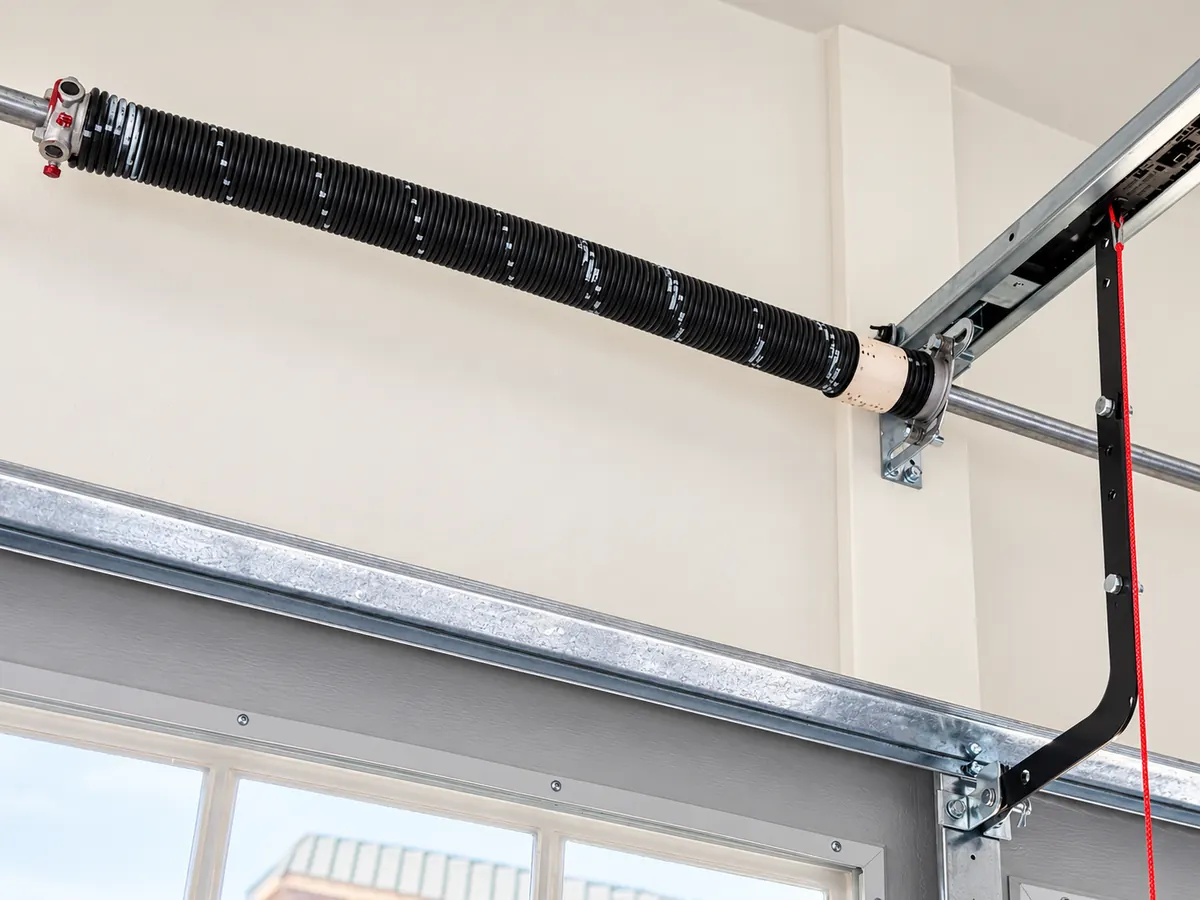
- Look. With the door closed, look at the springs, cables, rollers and brackets. Frayed cable strands near the bottom corners, a gap in a spring coil or a cracked roller means it’s time to book a repair.
- Balance test. Only if both springs look whole: with the door fully closed, pull the red release cord and lift the door by hand to about halfway. It should lift smoothly and stay put. If it’s heavy, drops or shoots up, the springs need adjusting by a company. Close it by hand; the opener reconnects the next time it runs.
- Reverse test. Lay a 2-by-4 flat on the floor where the door closes and run the opener. The door should reverse when it touches the wood. If it doesn’t, stop using the opener and have it serviced.
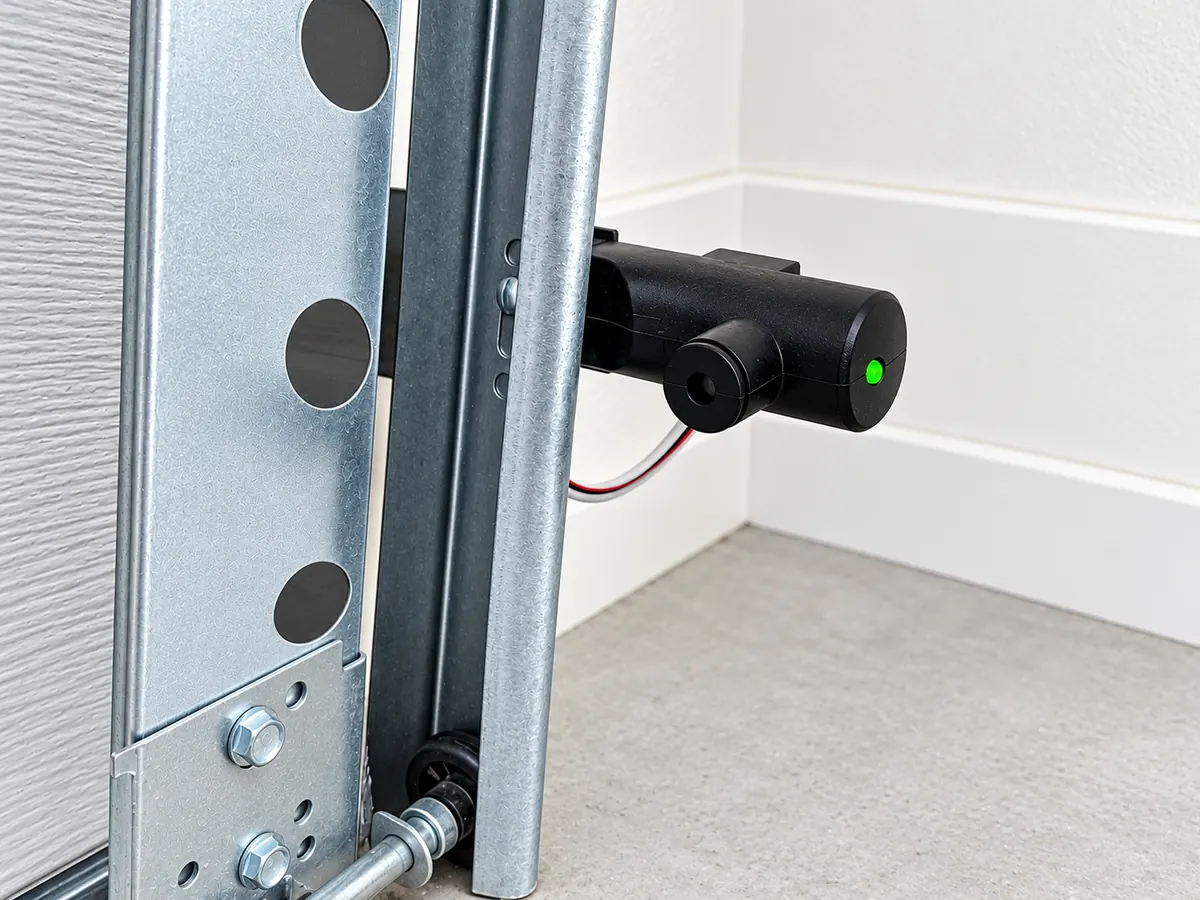
- Sensor test. As the door closes, wave something across the beam between the two sensors by the floor. The door should reverse. If it doesn’t after you wipe and line up the sensors, have it serviced.
Twice a year, wipe the tracks and lubricate the moving parts (the table below says which). In the West Valley, spring and fall are good times: before the summer heat and after the monsoon dust.
What should you do yourself, and what should a company do?
| Job | Who | Notes |
|---|---|---|
| Wipe the tracks clean | You | A damp cloth, then dry them. Don’t grease the tracks; grease holds dust. |
| Lubricate hinges, roller bearings and the spring coils | You | A garage door spray (silicone or white lithium), lightly, then wipe off the excess. WD-40 cleans; it doesn’t lubricate for long. |
| Tighten loose hinge and track bolts | You, gently | Snug, not hard: overtightening strips the holes. Never loosen anything on the bottom brackets or the spring bar. |
| Clean and line up the safety sensors | You | Wipe the lenses; both lights should be steady. |
| Replace a cracked bottom seal | You or a company | Easy on most doors if the seal slides into a channel on the bottom panel. |
| Replace rollers | A company | The bottom rollers sit in the brackets that hold the lift cables under spring tension. |
| Adjust or replace springs | A company | Wound springs can break bones. See broken spring repair. |
| Cables, drums and bottom brackets | A company | All under spring tension. See off track and cables. |
| Opener force and travel settings | A company, or carefully by the manual | Turning the force up to make a sticky door close hides the real problem and weakens the safety reverse. |
What do garage door noises mean?
| What you hear | Usual cause | What to do |
|---|---|---|
| Squeak or creak | Dry hinges, rollers or springs | Lubricate them. If it comes back within weeks, the rollers are likely worn. |
| Rattle or shake | Loose hinge or track bolts, or a slack opener chain | Snug the hinge and track bolts. Leave chain adjustment to a company or the opener manual. |
| Grinding | Worn rollers, a bent track, or stripped gears in the opener | Stop and look. If the opener hums or grinds but the door barely moves, see opener repair. |
| A loud bang | Usually a spring breaking | Stop using the door and look for a gap in the spring coil. See broken spring repair. |
| Popping or jerking as it moves | A roller binding in a dirty or bent track, or a door out of balance | Clean the tracks, then do the balance test below. If the door still jerks, have it looked at. |
Worn steel rollers are a common reason a door stays loud after lubrication. Sealed nylon rollers run much quieter; replacing a set is a company job because of the bottom brackets.
How do West Valley heat and dust affect a garage door?
- Heat dries out lubricant. A closed garage gets far hotter than the air outside in summer, and grease on hinges and rollers dries and gums up faster than in milder places. That’s why squeaks often start in July.
- Dust storms put grit in the tracks. Arizona’s monsoon season runs June 15 to September 30, and its dust storms leave a film in the tracks and roller bearings. Wipe the tracks after a big storm, before running the door much.
- Sun hardens the bottom seal. The rubber strip along the bottom of the door cracks and shrinks in the sun, leaving gaps that let in dust, water and insects. If you can see daylight under a closed door, the seal is due.
- Many springs are original. Standard springs are commonly rated for about 10,000 cycles, roughly seven to ten years of daily use. In a home built in the 2000s with its first springs, ask about them at a tune-up, but only replace a spring that tests weak or shows wear.
What should a professional tune-up include?
A proper tune-up usually takes about an hour per door and covers the parts you shouldn’t handle yourself:
- Checking spring tension with a balance test, and adjusting it if the door is heavy or drifts
- Inspecting the cables, drums, bottom brackets, rollers, hinges and bearings
- Lining up and tightening the tracks and hardware
- Lubricating the springs, hinges and roller bearings
- Testing the safety reverse and the sensors, and setting the opener’s force and travel limits
- Checking the bottom seal and noting anything worn
- A written list of what they found, with what needs fixing now and what can wait
What does a garage door tune-up cost?
| Job | Typical range | Notes |
|---|---|---|
| Tune-up, from national cost guides | $100 to $250 | Inspection, lubrication, tightening, balance and safety tests |
| Tune-up specials advertised by Phoenix-area companies | About $30 to $130 | Some waive the fee if you book a repair during the visit |
| Roller replacement | $110 to $230 | Parts and labor for a set |
| Repairs found during a tune-up | Priced separately | See what garage door repairs cost |
Ranges, not quotes, checked October 2026. See where these prices come from.
Is a cheap tune-up special a good deal?
It can be. A $30 to $50 tune-up is priced low enough that the company is usually counting on finding a repair. That’s fine when something really is worn. It’s a problem when a working spring gets replaced because it’s “old.” Go in knowing what to ask:
- What did the balance test show? A door that stays put halfway up has springs doing their job.
- Can you show me the worn part? A cracked roller, a frayed cable or a gap in a spring is easy to point at.
- Is this needed now, or can it wait until my next tune-up?
- What will the total be, in writing, before you start?
If a tune-up turns into a quote over a few hundred dollars, it’s reasonable to thank them, pay the visit fee and get a second quote.
What to ask before you book a tune-up
- What does the tune-up include? Ask for the list.
- Does it cover the opener as well as the door, and both doors if you have two?
- What lubricant do you use, and will you lubricate the springs?
- Will you leave a written note of what you found and what can wait?
- Is your company licensed? Check with the Arizona Registrar of Contractors at roc.az.gov.
Where these prices and tips come from
We checked these sources in October 2026. We don’t do tune-ups or set prices; local companies do.
- International Door Association, garage door care and maintenance, for the monthly tests and twice-yearly lubrication
- Angi, garage door tune-up cost (October 2026) and garage door repair costs (October 2026), for tune-ups and rollers
- Homewyse, cost to tune up a garage door (January 2026)
- HomeGuide, garage door tune-up cost (2025)
- Tune-up prices published by Phoenix-area garage door companies (October 2026). We don’t name them; this site doesn’t recommend or rate individual companies.
- A garage door maker’s guide to noisy doors, for what each sound means and which lubricants to use